Enquiry form

A Marquetry Cabinet by Jackson and Graham
Circa 1850s
Thank you! Your submission has been received!
Oops! Something went wrong while submitting the form.
Website Under Development

for enquiries contact: contact@mallettantiques.com  | +44 020 7839 4747

Available for sale
Mallett Classic

A Marquetry Cabinet by Jackson and Graham

Circa 1850s

Dimensions:

No items found.
A Marquetry Cabinet by Jackson and Graham

Description

Circa 1850s

Dimensions:

Provenance:

Written by:
Rufus Bird

Details

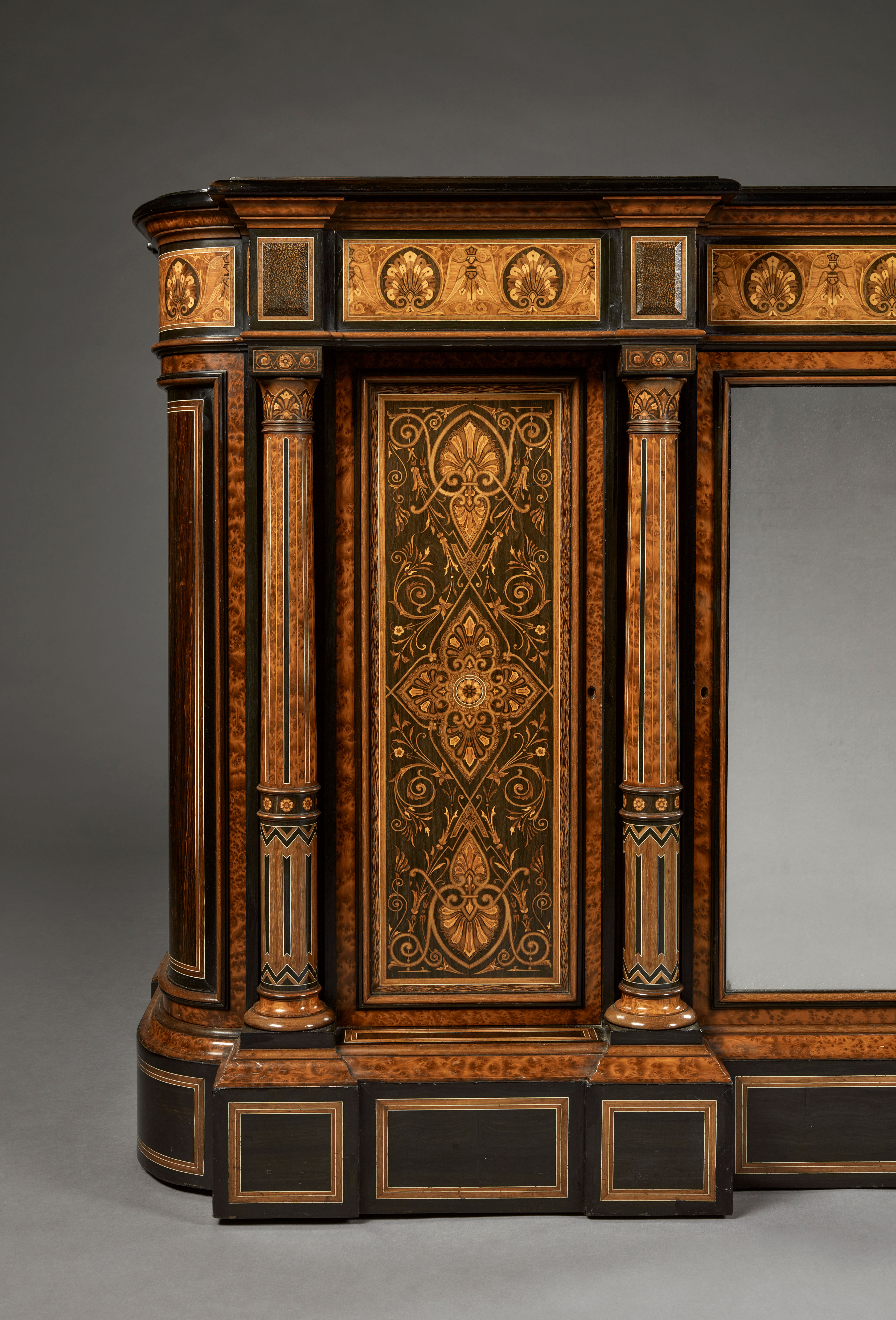
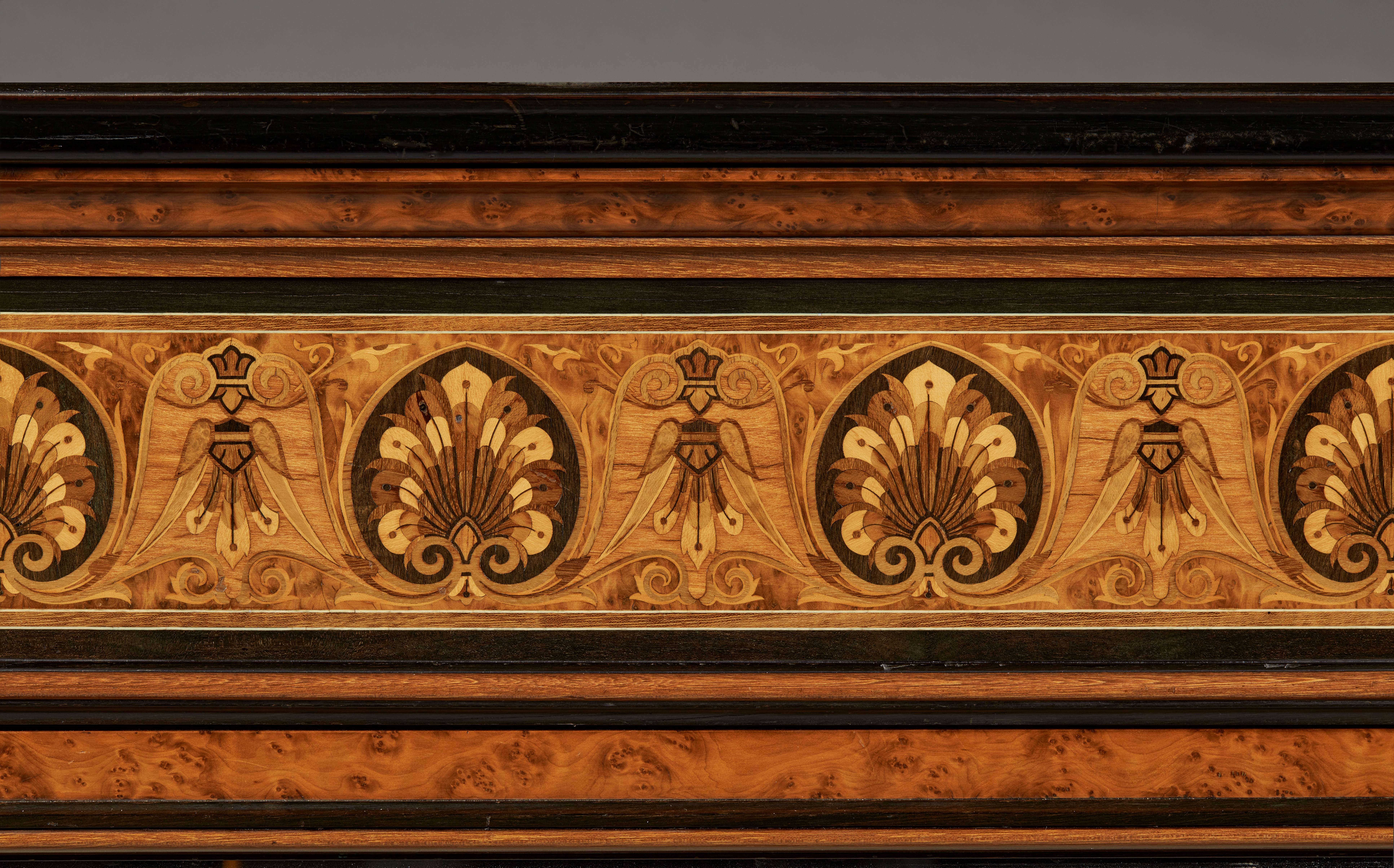
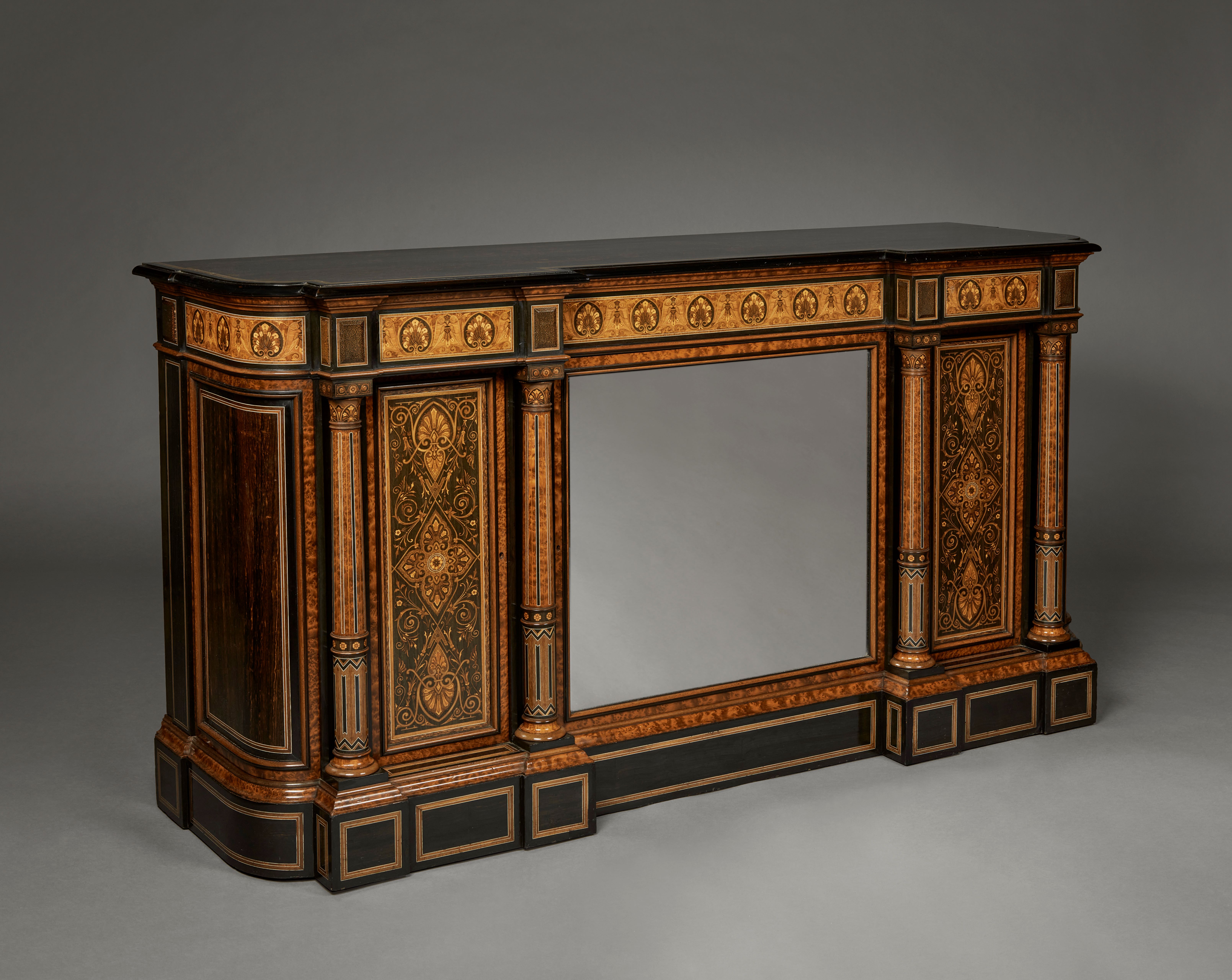
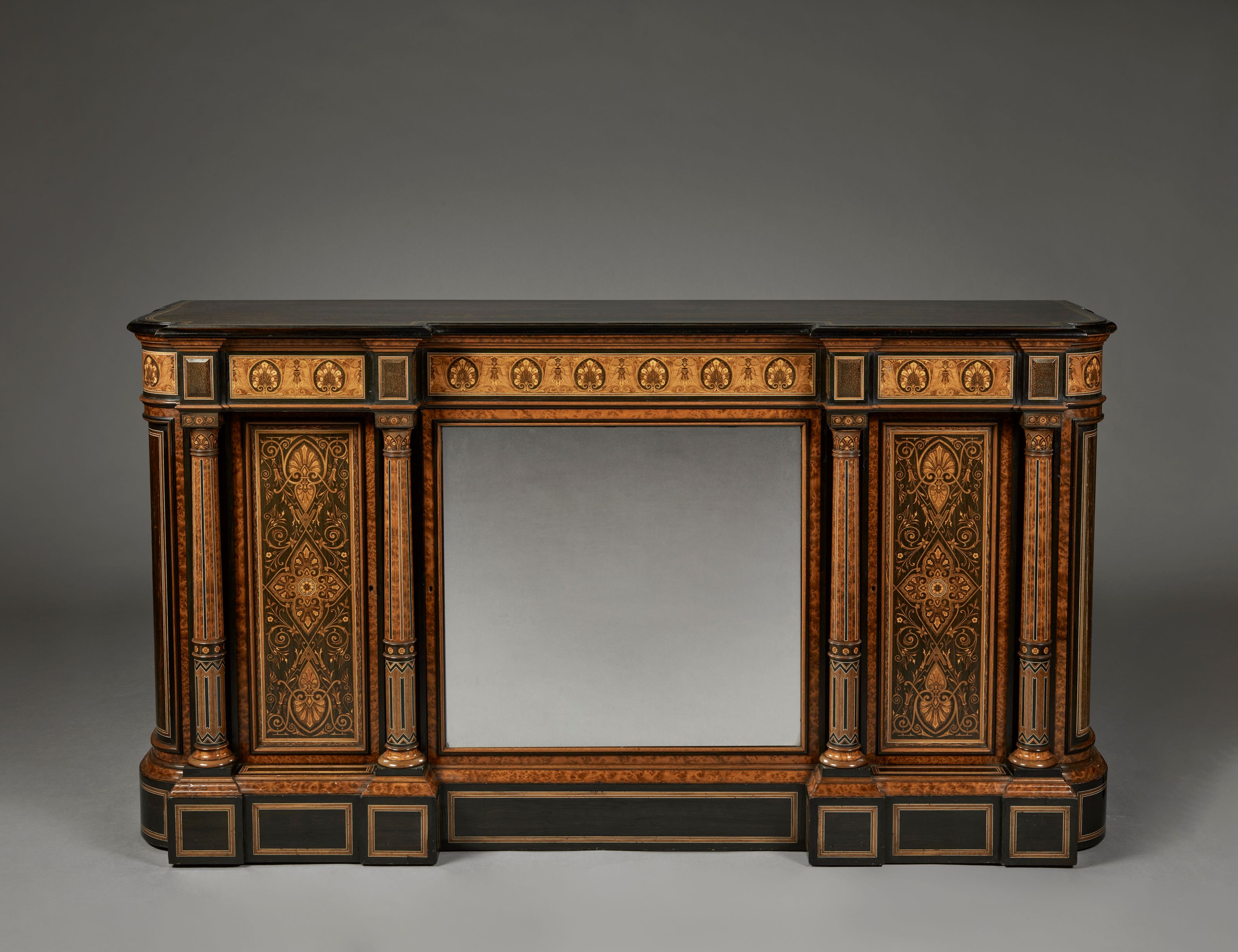
This beautiful side cabinet was undoubtedly made by the renowned London cabinet-makers Jackson & Graham, who worked to novel floral and geometric patterns by the highly respected designer Owen Jones(1809-1874). This side cabinet is close in design to several others of a similarly large scale and rich ornamentation. The largest of the group is a monumental cabinet made for Henry Arthur Brassey (1841-1890) for either his London townhouse on Park Lane or his country house, Preston Hall, Aylesford, Kent. The central panel is fitted with a brass monogram of HAB and is thought to have been made by the Danish-born cabinet-maker and inlayer Ole Petersen(1864-1876) who worked on most of the high-quality exhibition pieces made by Jackson & Graham. The cabinet was acquired by the Fitzwilliam Museum, Cambridge in 1980 (museum no. M.15-1980). Other low cabinets of a similar design combining renaissance inspired neo classical motifs, with Moorish naturalistic details can be seen in many museum collections; of a special note, is an open cabinet at the Metropolitan Museum New York (museum no. 1983.121), with similar mirrored centrepiece and articulated colonettes.  

Jackson & Graham were established in London in 1836; their prominence rose as makers in the 1850s.Growing to international acclaim after they designed the  hanging for the royal party at the Great Exhibition in London in 1851. Following which their clients included Queen Victoria, the French Emperor Napoleon III, the Sultan of the Ottoman Empire, the Grand Khedive at Cairo, and the Royal Palace in Siam. Their international recognition remained consistent until they ceased trading in 1885. Marking them as among the most prominent of their craft throughout the 19th century.

As further testament to their skill and precision, John Hungerford Pollen (1820-1902), assistant keeper at the South Kensington Museum from 1863-1876, highlighted the quality of Jackson& Graham’s cabinet making. Noting the delicate combination of tapering shafts with “reticulated patterns” which “had to be graduated in size from top to bottom.” This process exhibits the remarkably “laborious and costly operation” taken by their cabinet workshop, so much so that it was unique to the time. In turn situating this as a noteworthy example of the highest-quality of British cabinet making. (G. P. Bevan, British Manufacturing Industries,1876-77, pp, 161-216, quoted in C. Payne, British Furniture, 1820 to 1920, the Luxury Market, London, 2023, p. 299)

The consistent participation of Jackson & Graham in all subsequent Great Exhibitions until their impending closure in 1882 firmly established their reputation as preeminent cabinet makers of the 19th century. This distinction holds particular significance given that furniture production between 1813 and 1916 experienced a fourfold increase. The Mid-Victorian ebony and marquetry side cabinet, attributed to Jackson & Graham, with its design ascribed to Owen Jones, represents this stellar example of an alignment with the foremost makers and designers of the period.
‍

Written by:
Rufus Bird

Images

No items found.

Circa 1850s

Written by:
Rufus Bird

A Marquetry Cabinet by Jackson and Graham

This beautiful side cabinet was undoubtedly made by the renowned London cabinet-makers Jackson & Graham, who worked to novel floral and geometric patterns by the highly respected designer Owen Jones(1809-1874). This side cabinet is close in design to several others of a similarly large scale and rich ornamentation. The largest of the group is a monumental cabinet made for Henry Arthur Brassey (1841-1890) for either his London townhouse on Park Lane or his country house, Preston Hall, Aylesford, Kent. The central panel is fitted with a brass monogram of HAB and is thought to have been made by the Danish-born cabinet-maker and inlayer Ole Petersen(1864-1876) who worked on most of the high-quality exhibition pieces made by Jackson & Graham. The cabinet was acquired by the Fitzwilliam Museum, Cambridge in 1980 (museum no. M.15-1980). Other low cabinets of a similar design combining renaissance inspired neo classical motifs, with Moorish naturalistic details can be seen in many museum collections; of a special note, is an open cabinet at the Metropolitan Museum New York (museum no. 1983.121), with similar mirrored centrepiece and articulated colonettes.  

Jackson & Graham were established in London in 1836; their prominence rose as makers in the 1850s.Growing to international acclaim after they designed the  hanging for the royal party at the Great Exhibition in London in 1851. Following which their clients included Queen Victoria, the French Emperor Napoleon III, the Sultan of the Ottoman Empire, the Grand Khedive at Cairo, and the Royal Palace in Siam. Their international recognition remained consistent until they ceased trading in 1885. Marking them as among the most prominent of their craft throughout the 19th century.

As further testament to their skill and precision, John Hungerford Pollen (1820-1902), assistant keeper at the South Kensington Museum from 1863-1876, highlighted the quality of Jackson& Graham’s cabinet making. Noting the delicate combination of tapering shafts with “reticulated patterns” which “had to be graduated in size from top to bottom.” This process exhibits the remarkably “laborious and costly operation” taken by their cabinet workshop, so much so that it was unique to the time. In turn situating this as a noteworthy example of the highest-quality of British cabinet making. (G. P. Bevan, British Manufacturing Industries,1876-77, pp, 161-216, quoted in C. Payne, British Furniture, 1820 to 1920, the Luxury Market, London, 2023, p. 299)

The consistent participation of Jackson & Graham in all subsequent Great Exhibitions until their impending closure in 1882 firmly established their reputation as preeminent cabinet makers of the 19th century. This distinction holds particular significance given that furniture production between 1813 and 1916 experienced a fourfold increase. The Mid-Victorian ebony and marquetry side cabinet, attributed to Jackson & Graham, with its design ascribed to Owen Jones, represents this stellar example of an alignment with the foremost makers and designers of the period.
‍

Written by:
Rufus Bird

Explore

View more

Heading

Heading

Heading

Heading

Lorem ipsum dolor sit amet, consectetur adipiscing elit. Suspendisse varius enim in eros elementum tristique. Duis cursus, mi quis viverra ornare, eros dolor interdum nulla, ut commodo diam libero vitae erat. Aenean faucibus nibh et justo cursus id rutrum lorem imperdiet. Nunc ut sem vitae risus tristique posuere.