Enquiry form
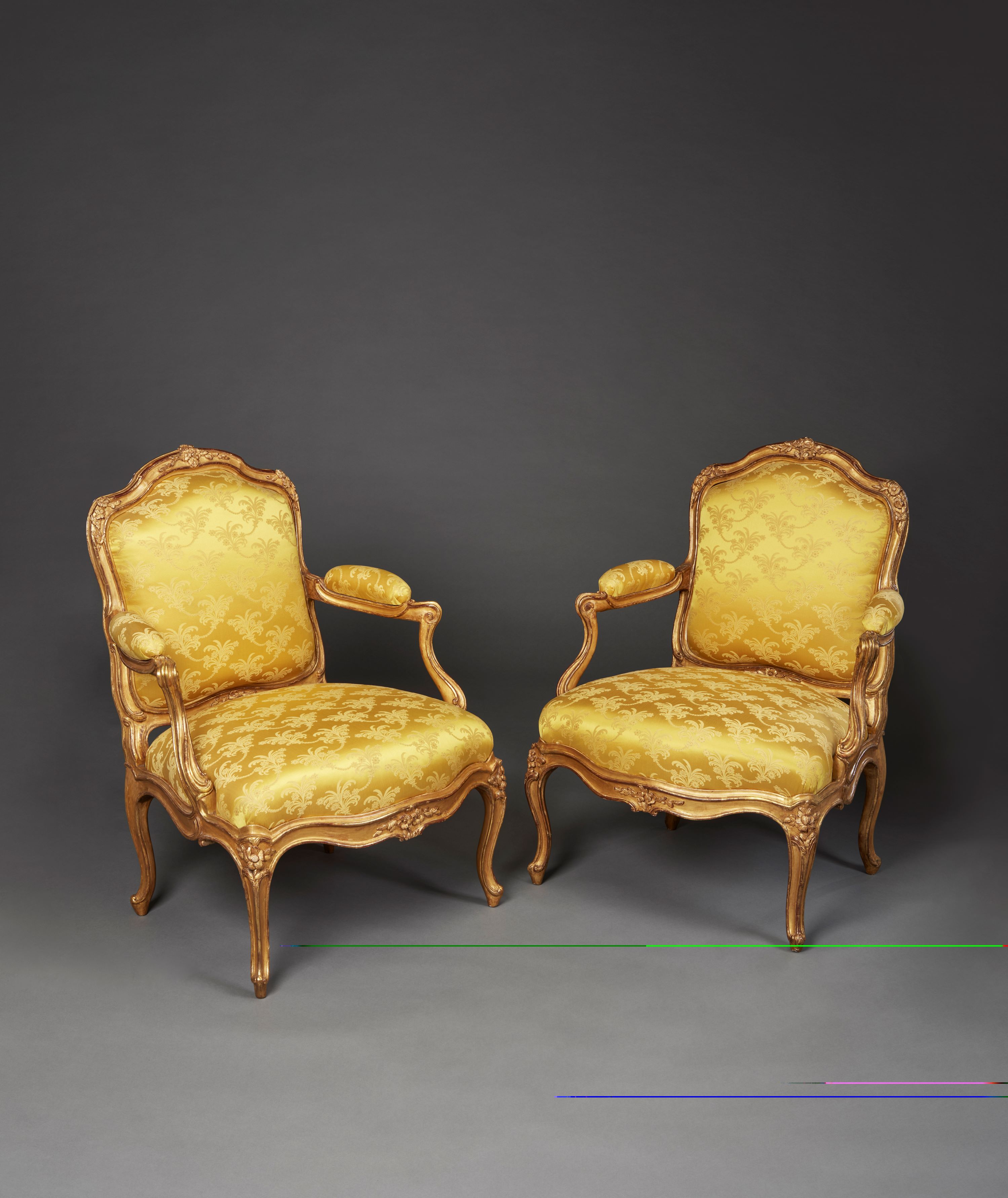
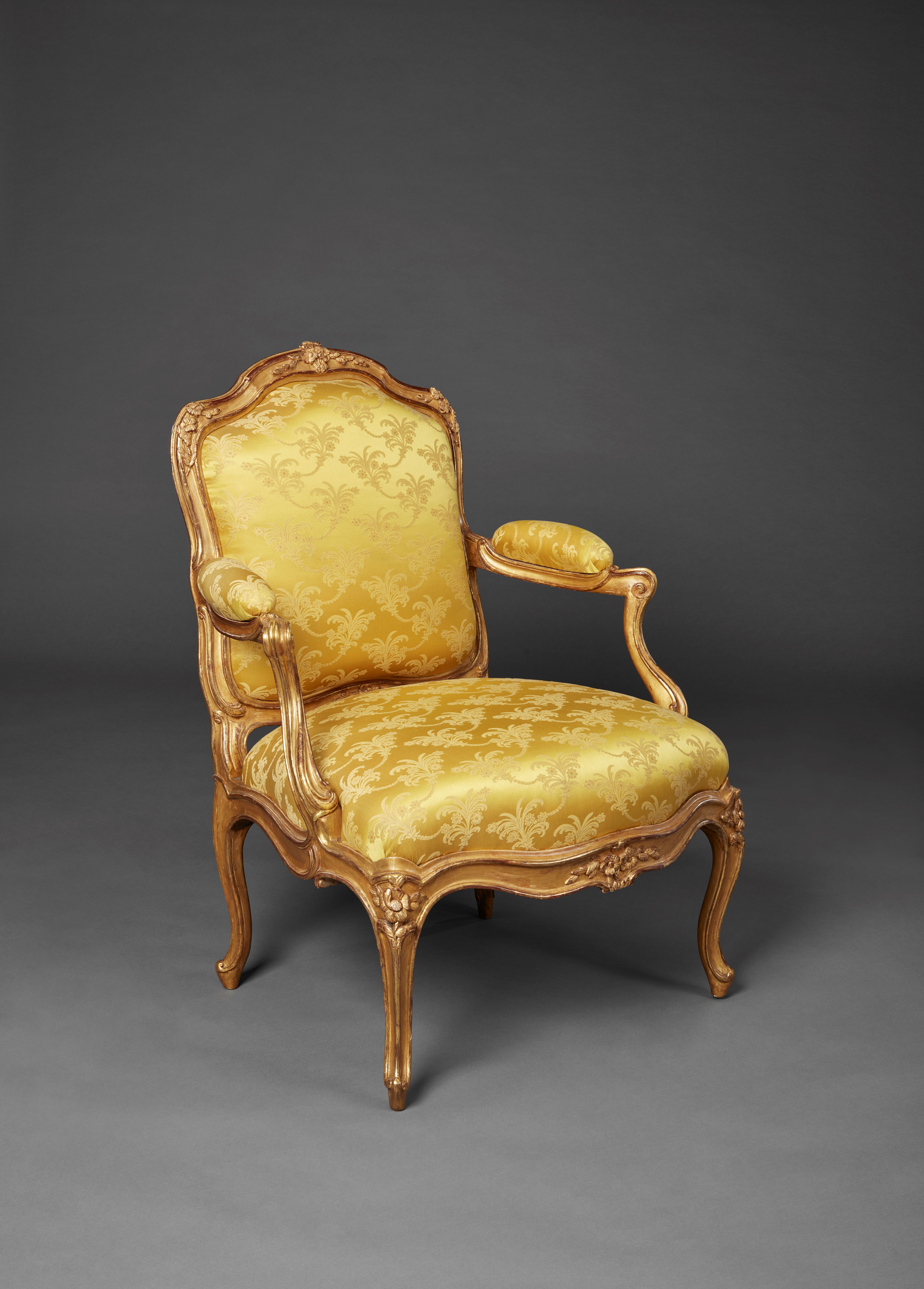
A Pair of Louis XV Giltwood Fauteuils à Chasis
Circa 1750
Thank you! Your submission has been received!
Oops! Something went wrong while submitting the form.

for enquiries contact: contact@mallettantiques.com | +44 020 7839 4747

Circa 1750
Back Height: 37in (94cm), Seat Height: 17in (43cm), Width: 28in (71cm), Depth: 21in (53cm)
Circa 1750
Back Height: 37in (94cm), Seat Height: 17in (43cm), Width: 28in (71cm), Depth: 21in (53cm)
Pierre Remy
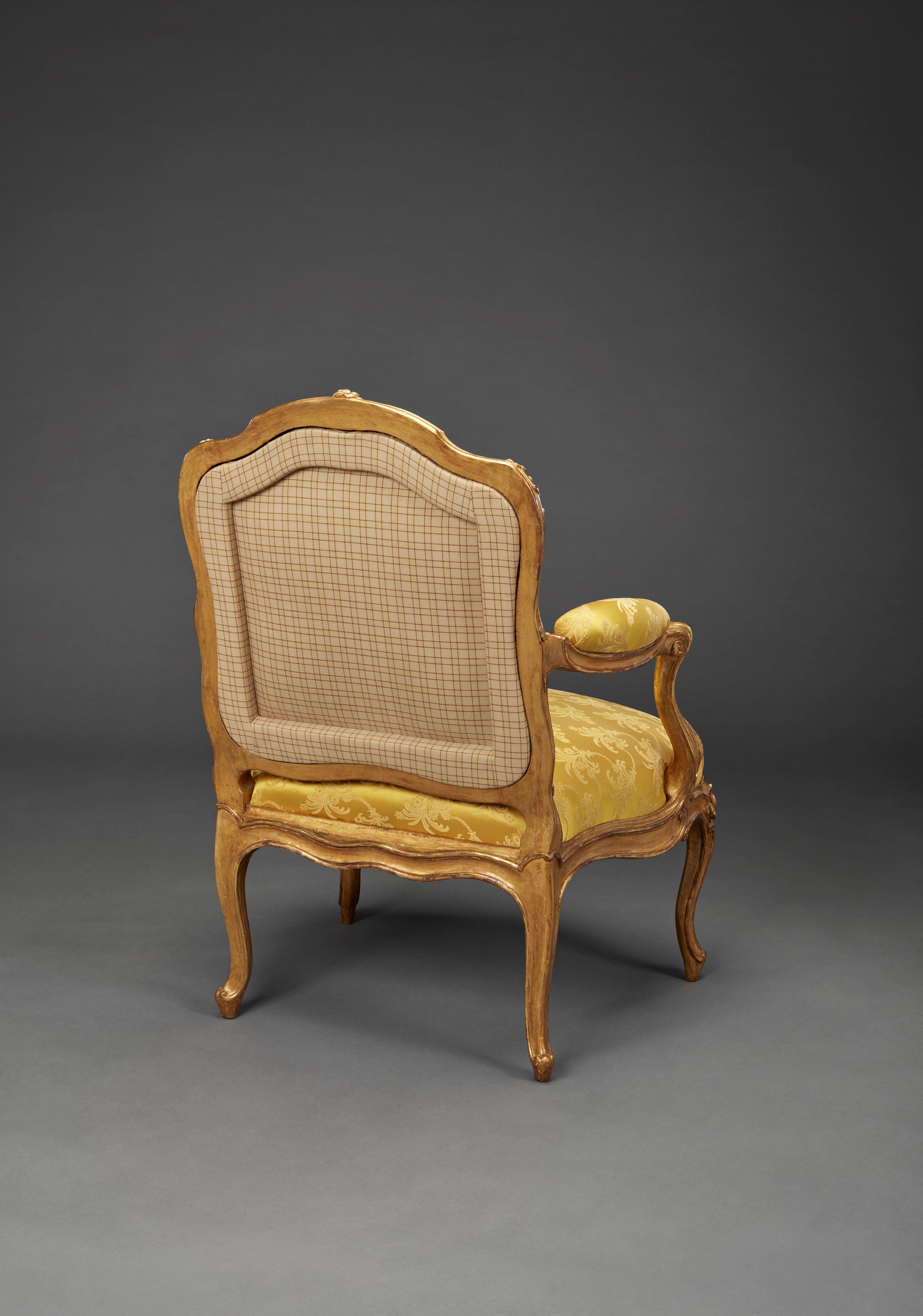
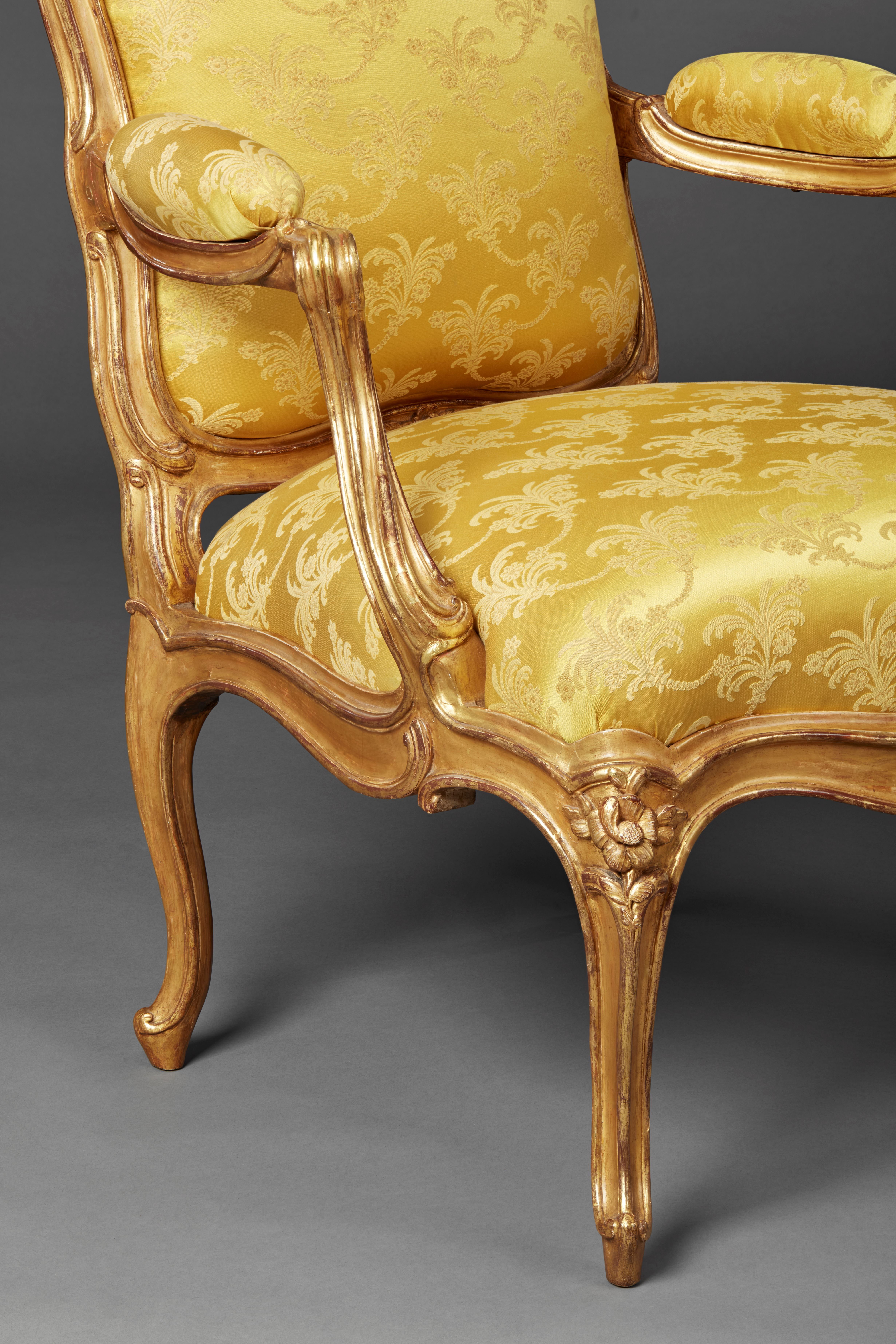
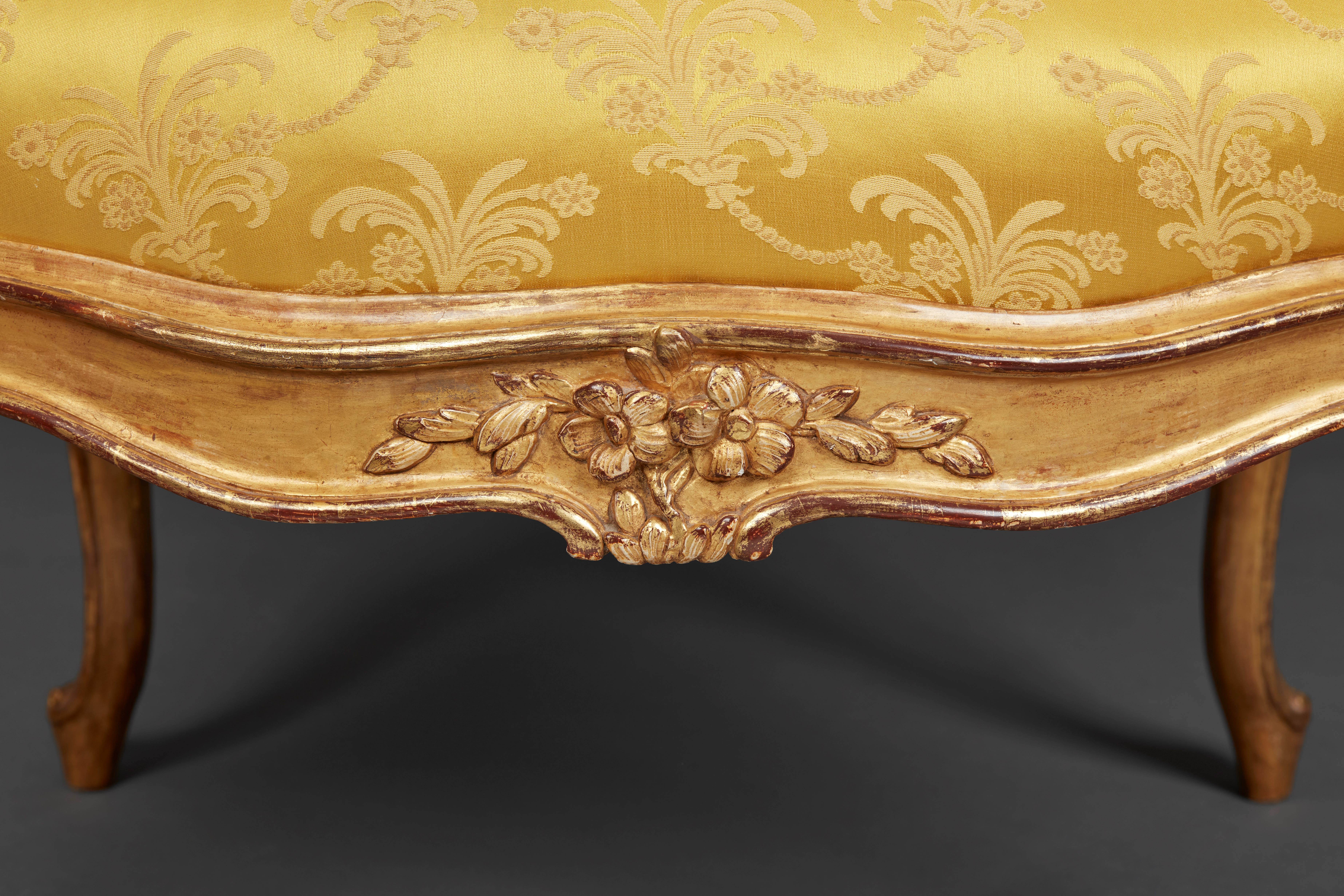
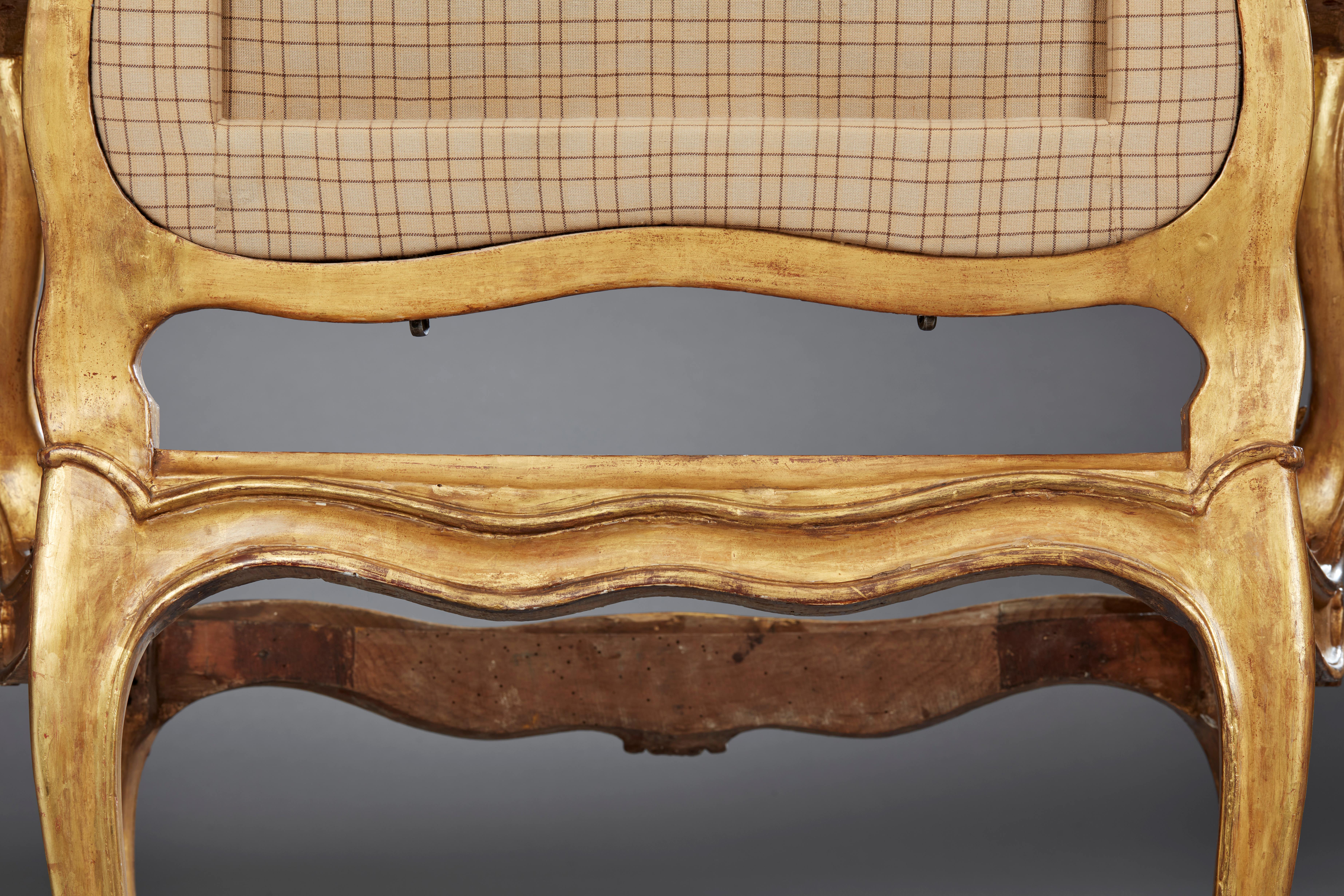
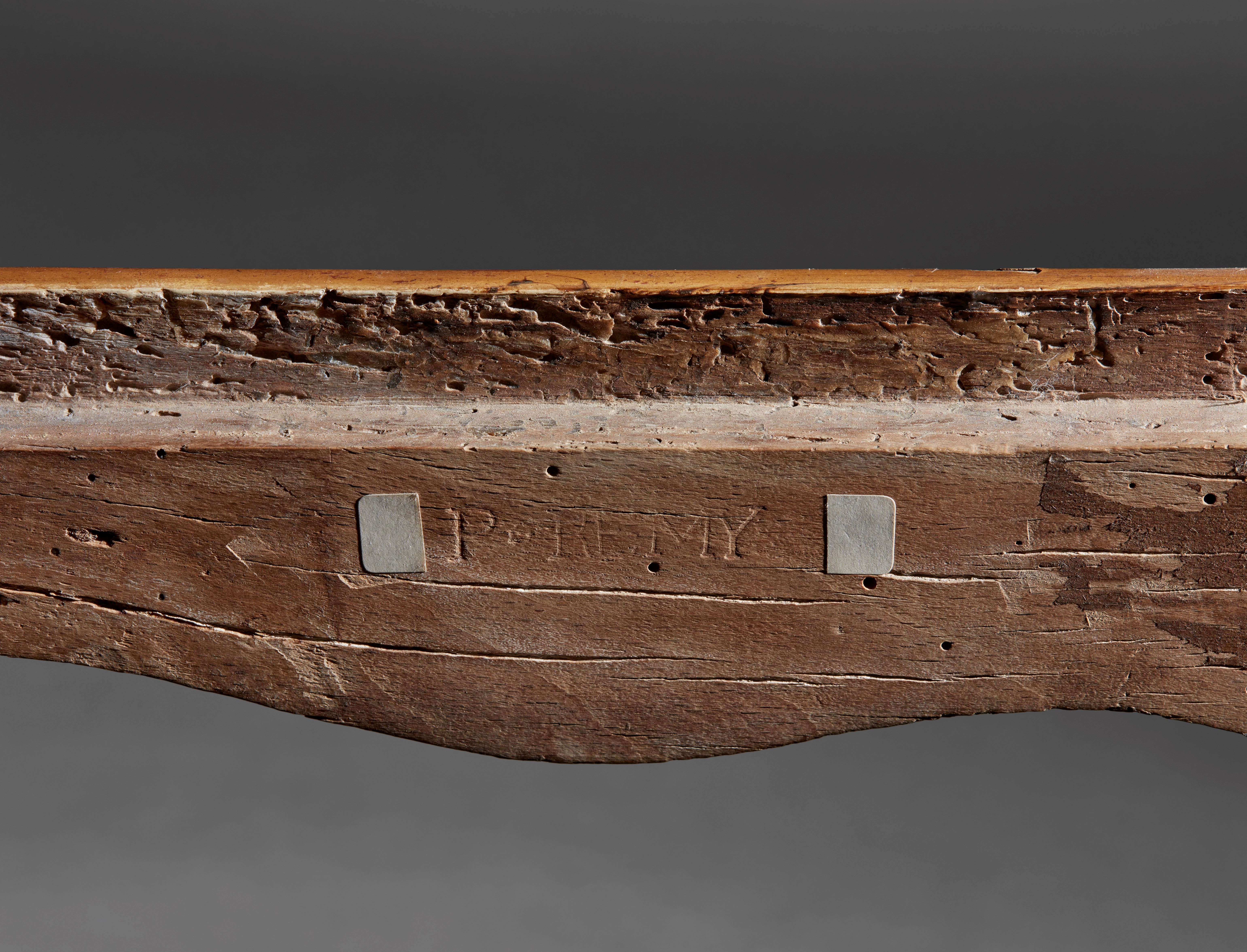
A pair of Louis XVI fauteuils à chassis in particularly fine condition. The frames are regilded and haveshield-shaped backs and floral carving on the shoulders and at the apex of the back. The side rails arecarved with a scroll moulding with a deep carved flute between. The arms are carved with‘C’scrollsframing the armpads with a scroll handle which transforms to an‘S’scroll and slightly twists as itjoins the seat rail. The seat rails are carved with mouldings which are scrolling and have a high relieffloral motif at the centre. The chairs stand on cabriole legs with scrolled tips, the front ones arecarved with an‘S’scroll at the front edge, which opens at the top into a further floral motif, againcarved in high relief.Both stamped on the back rail‘P REMY’.
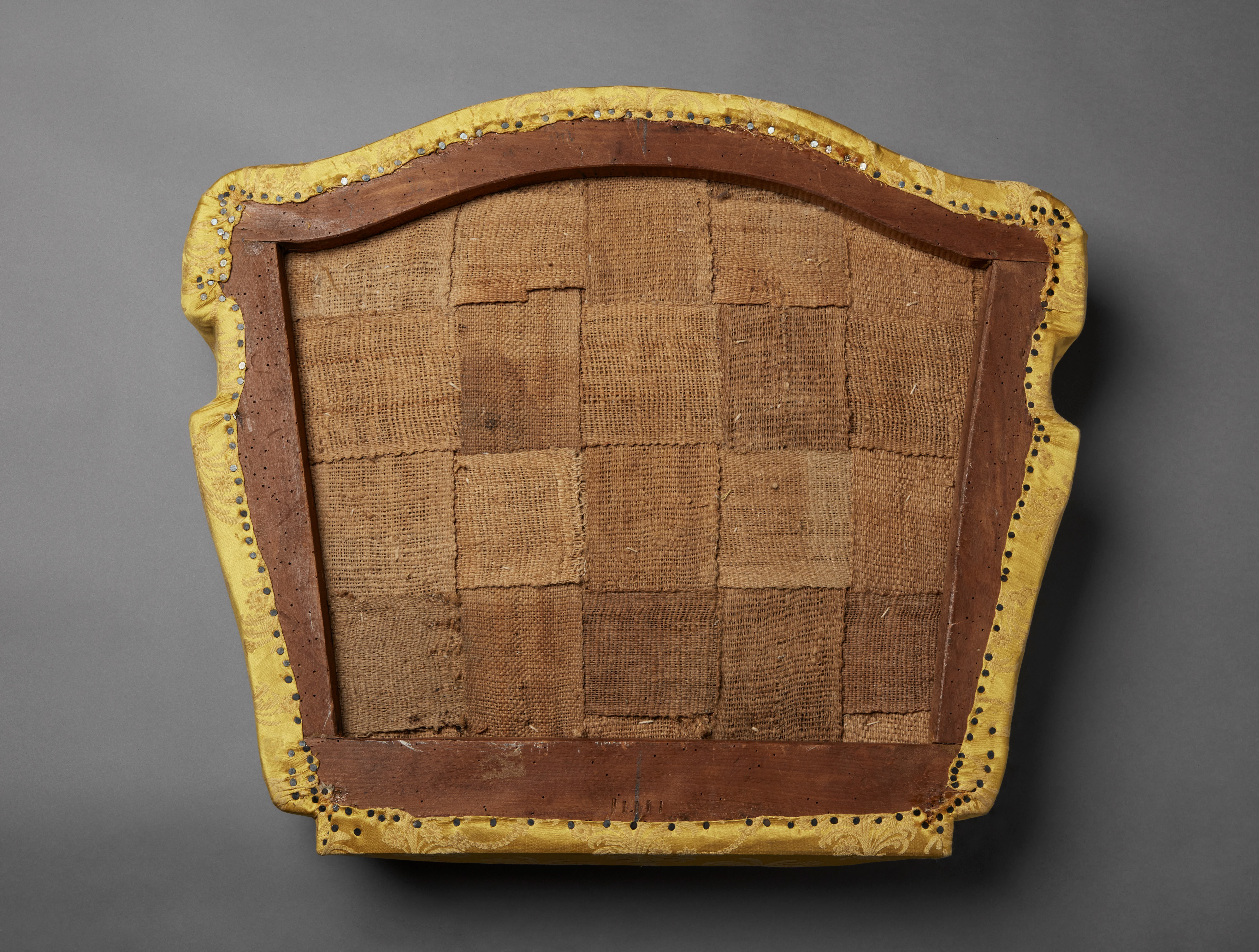
The seat frames are original, and they retain theiroriginal webbing
Pierre Remy (1724-1798) was born into a family of furniture-makers with strong connectionsthroughout the Paris trade. His father made seat furniture (menuisier) and his mother was the nieceof the great royal cabinetmaker (ébéniste) Gilles Joubert (1689-1775): the Remy family workshopswere established in the rue Poissonière. Remy became a master (maître) in 1750 and continued tomake furniture until he retired in 1780, living a further eighteen years. Remy was one of the leadersof stylein chair design in the middle of the 18th-century. He and Louis Delanois (1731-1792) wereamongst the first menuisiers to take a strong interest in the revival of classicism. These stylisticdevelopments are evident in some of his chairs, especially thosefrom the‘transitional’period, i.e.the moment when furniture design evolved from the curving rococo to the rectilinear classical, thefashion for which began in the late 1750s.
These chairs are typical of his workshop and the motifs used are consistently seen on his chairs ofthis period. In particular, the use of large peonies on the top rail, apron and the knees, combinedwith the highly sculptural arm supports and grand proportions are characteristic of his workshop. SeeK. Peres,‘Pierre Remy, menuisier sous Louis XV et Louis XVI’,L'Objet d'Art, March 2001, pp. 74-8

Circa 1750
Back Height: 37in (94cm), Seat Height: 17in (43cm), Width: 28in (71cm), Depth: 21in (53cm)

Pierre Remy
A pair of Louis XVI fauteuils à chassis in particularly fine condition. The frames are regilded and haveshield-shaped backs and floral carving on the shoulders and at the apex of the back. The side rails arecarved with a scroll moulding with a deep carved flute between. The arms are carved with‘C’scrollsframing the armpads with a scroll handle which transforms to an‘S’scroll and slightly twists as itjoins the seat rail. The seat rails are carved with mouldings which are scrolling and have a high relieffloral motif at the centre. The chairs stand on cabriole legs with scrolled tips, the front ones arecarved with an‘S’scroll at the front edge, which opens at the top into a further floral motif, againcarved in high relief.Both stamped on the back rail‘P REMY’.
The seat frames are original, and they retain theiroriginal webbing
Pierre Remy (1724-1798) was born into a family of furniture-makers with strong connectionsthroughout the Paris trade. His father made seat furniture (menuisier) and his mother was the nieceof the great royal cabinetmaker (ébéniste) Gilles Joubert (1689-1775): the Remy family workshopswere established in the rue Poissonière. Remy became a master (maître) in 1750 and continued tomake furniture until he retired in 1780, living a further eighteen years. Remy was one of the leadersof stylein chair design in the middle of the 18th-century. He and Louis Delanois (1731-1792) wereamongst the first menuisiers to take a strong interest in the revival of classicism. These stylisticdevelopments are evident in some of his chairs, especially thosefrom the‘transitional’period, i.e.the moment when furniture design evolved from the curving rococo to the rectilinear classical, thefashion for which began in the late 1750s.
These chairs are typical of his workshop and the motifs used are consistently seen on his chairs ofthis period. In particular, the use of large peonies on the top rail, apron and the knees, combinedwith the highly sculptural arm supports and grand proportions are characteristic of his workshop. SeeK. Peres,‘Pierre Remy, menuisier sous Louis XV et Louis XVI’,L'Objet d'Art, March 2001, pp. 74-8
Lorem ipsum dolor sit amet, consectetur adipiscing elit. Suspendisse varius enim in eros elementum tristique. Duis cursus, mi quis viverra ornare, eros dolor interdum nulla, ut commodo diam libero vitae erat. Aenean faucibus nibh et justo cursus id rutrum lorem imperdiet. Nunc ut sem vitae risus tristique posuere.